.png)
The Omnichannel Blueprint: Architecting Seamless User Journeys Across Web and Native Mobile
Introduction
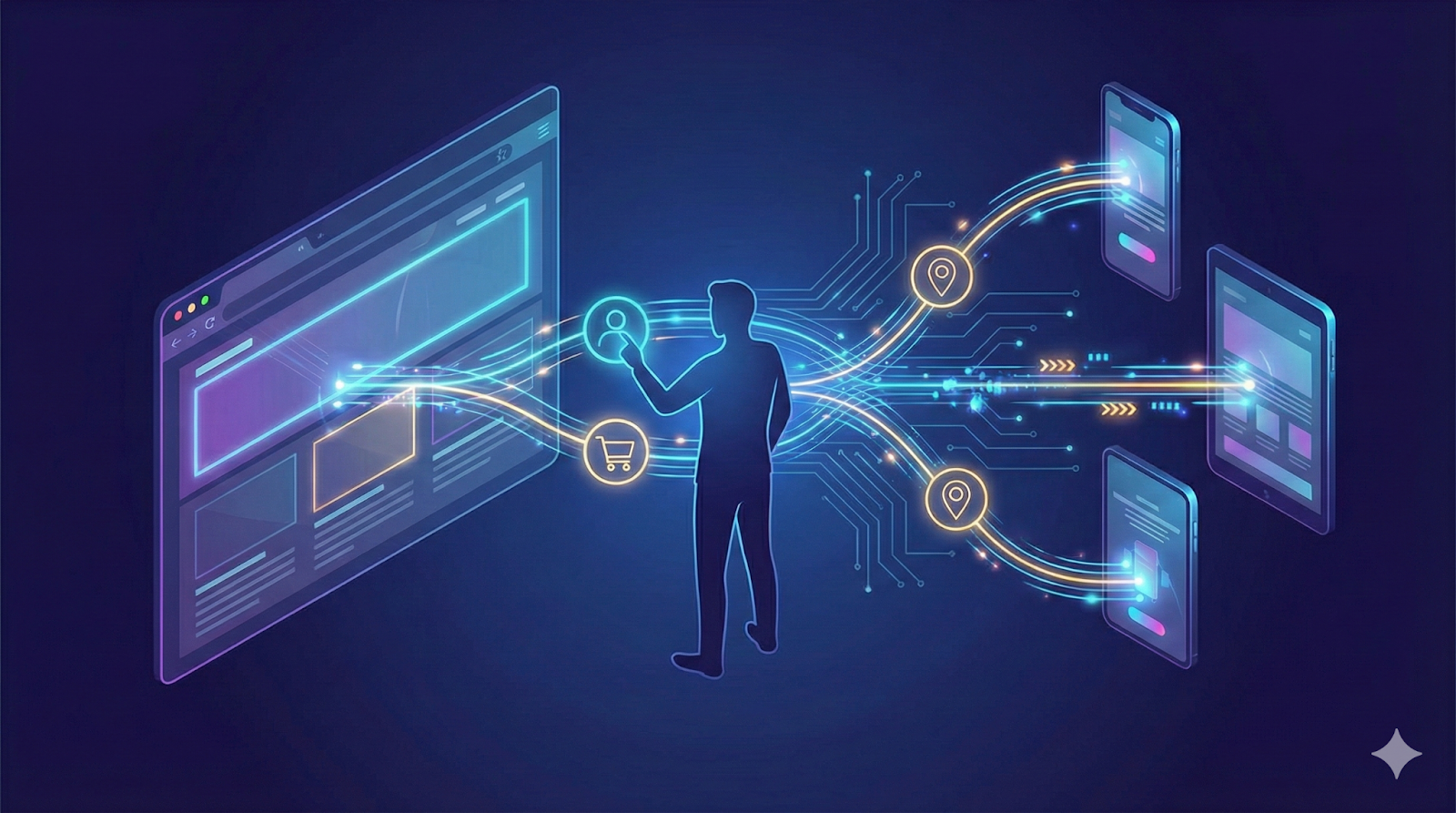
Great user journeys are built when systems work in harmony. As users switch effortlessly between web and native mobile experiences, continuity and context become the foundation of trust. This article outlines how an omnichannel blueprint brings structure to this complexity, enabling organizations to deliver unified, scalable experiences across every touchpoint.
The Architecture Behind Effortless User Journeys
Modern products have more ways than ever to connect with users. Websites, mobile apps, search, social platforms, and notifications all play a role in shaping how people discover, engage, and take action. When these touchpoints work together, they create experiences that feel effortless, consistent, and trustworthy.
An omnichannel blueprint provides the structure to make this coordination possible. It ensures that user intent, context, and progress carry smoothly across platforms, so interactions feel like a continuation rather than a restart. Instead of managing channels as separate products, teams design a single, connected journey that adapts naturally as users move between web and mobile.
This approach doesn’t just improve usability it strengthens engagement, reduces friction, and supports long-term growth. By aligning systems, data, and experiences around the user journey, an omnichannel blueprint helps organizations deliver clarity, continuity, and value at every touchpoint.
Case Study: How Sephora Perfects the Web-to-App Handoff
Problem: Sephora observed that most customer journeys begin on the open web through search and social platforms, while the highest engagement happens inside the native app. However, moving users from web to app often caused friction, as users lost context and dropped off before converting.
Solution: Sephora designed web and mobile as a single journey using a unified Beauty Insider identity. Instead of pushing app downloads generically, they offered clear app-only value through features like Virtual Artist. Deep linking ensured that when users opened the app, they returned to the exact product and saved items they had viewed on the web.
Result: This seamless transition converted low-intent web traffic into high-engagement app users. By preserving context and intent across platforms, Sephora strengthened loyalty, increased conversion, and built a member base that now drives the majority of its revenue.
Case Study: Airbnb’s Context-Aware Web-to-App Handoff
Problem: Airbnb observed that many users begin their journey on the open web through Google search, especially when exploring destinations. The mobile website is ideal for fast discovery, but it is not designed for high-confidence actions like booking, managing payments, or trip planning. Asking users to switch to the app often risked losing their search context—dates, guest count, and filters—which could interrupt momentum and reduce conversion.
Solution: Airbnb designed the web and mobile app as two roles in the same journey. The mobile website acts as a lightweight discovery interface, optimized for quick loading and browsing. When users choose to “Open in App,” Airbnb performs a context-aware handoff. Instead of launching a generic app screen, the system transfers the full session state—selected dates, guest details, and price filters—directly into the app using deep linking and shared session data.
Result: Users experience a seamless upgrade rather than a restart. Inside the native app, the interface becomes richer and more interactive, with map-based exploration, smooth animations, and native capabilities like gesture controls and Apple Pay. By preserving intent and enhancing the experience at the right moment, Airbnb increases booking confidence, reduces drop-offs during platform transitions, and turns casual web discovery into completed transactions.
Designing Unified Digital Experiences Across Web and Mobile
Tweeny Technologies helps organizations transform fragmented web and mobile experiences into seamless user journeys. We design system-level architectures that enable frictionless transitions between web and app via deep linking, shared identity layers, and centralized session management. That is, when users transition between platforms, context—authentication state, preferences, and actions in progress—travels with them rather than resetting.
Our approach begins with how experience design integrates with backend systems that scale. We align a UX strategy, data architecture, and API-driven orchestration to help teams decrease drop-offs during platform transitions, increase engagement, and accelerate conversion. Rather than treat web and native applications as separate products, we architect them as interconnected components of a single experience ecosystem.
Conclusion: Designing for Seamless continuity
Seamless journeys are never an accident but a result of thoughtful system architecture. As the Sephora and Airbnb examples show, the real value lies in preserving user context as people move between web and mobile, turning platform transitions into moments of progress rather than friction. Building on this premise, our organization focuses on the creation of integrated architectures that guarantee users can shift with ease across platforms without losing context or continuity.
The continuity is possible through the omnichannel blueprint that connects identity, data, and experience across touchpoints and helps organizations create a conversion of discovery into engagement and action into long-term loyalty. In a world where users expect experiences to flow naturally, designing for continuity is no longer optional—it is a competitive advantage.



Explore more blogs



Building intelligent products, modern web platforms, and custom digital experiences.