.png)
Customer Success Without CSM Bloat: What Founders Need to Rethink
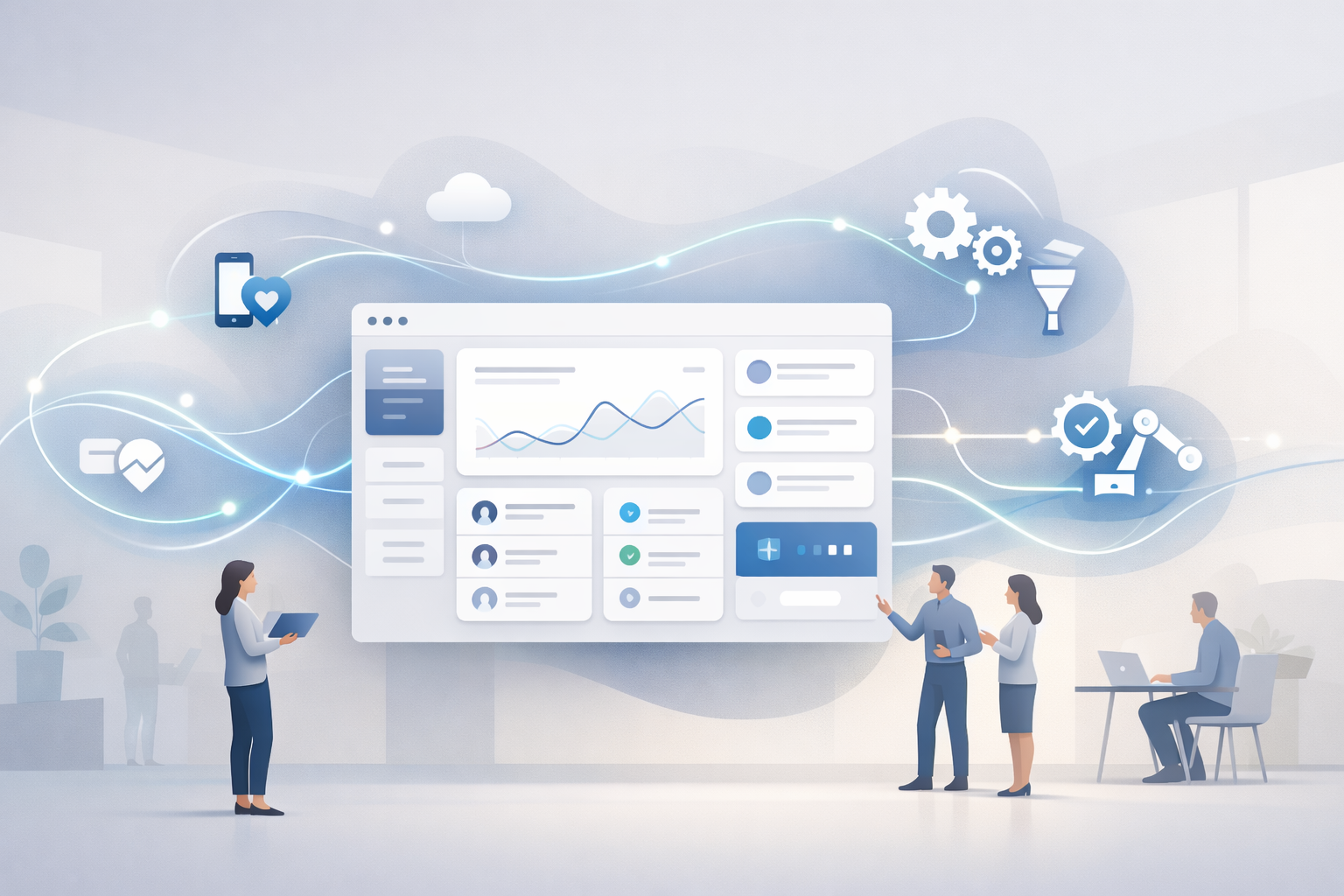
Why the Traditional Customer Success Model Is Breaking
Customer success scaled the obvious way: more customers meant more CSMs. For a time, it worked. Today, it doesn’t. Rising acquisition costs, tighter margins, and increasingly complex products have made linear CSM growth economically unsustainable and operationally fragile. Adding people no longer guarantees better retention or expansion; instead, it often results in inconsistency and cost without clarity.
The next era of customer success will not be based on headcount. It will be based on systems that incorporate AI-driven workflows and automation directly into the product and operating model. This shift is not about efficiency theater; it is about redefining where customer success actually lives.
The Current Landscape: Why Traditional Customer Success Is Under Strain
Customer success was designed for a simpler era. It scaled through people; more customers meant more CSMs, more meetings, and more manual oversight. That model no longer fits today’s reality.
Modern products serve thousands of customers across self-serve and enterprise motions, while expectations for speed, personalization, and proactive value have increased. Linear headcount growth cannot keep pace. The result is a growing mismatch between how customer success is staffed and how customers actually experience value.
How AI-Driven Customer Success Actually Works
AI-driven customer success replaces reactive, manual effort with systems that guide customers proactively. Instead of waiting for problems to surface, teams design workflows that observe behavior, anticipate needs, and act at the right moment.
1. Success Is Built Into the Product
- Customer success starts inside the product, not in meetings or follow-ups.
- Onboarding adjusts based on real user behavior rather than fixed checklists.
- When users hesitate or go off track, in-app guidance appears at the right moment.
As a result, customers learn by using the product itself instead of waiting for support or scheduled calls.
2. Real Usage Matters More Than Reported Feedback
- What customers do is often more reliable than what they say.
- AI looks at feature adoption, engagement patterns, and friction points to surface risk early.
- Churn signals appear before customers complain or disengage, while expansion opportunities become visible through deeper product usage
3. Most Actions Are Automated by Default
- Many customer success actions are predictable, and that’s where automation works best.
- Workflows handle routine guidance automatically, sending timely nudges when users get stuck or recommending features when they’re most relevant
- Lifecycle journeys adjust as behavior changes, without requiring constant manual oversight.
4. Human Involvement Is Intentional, Not Constant
- Automation isn’t about removing people; it’s about using them where they matter most.
- AI helps determine when human attention is actually needed. CSMs step in for high-risk, high-impact, or strategic situations, while routine follow-ups and status checks are handled automatically.
- This keeps human effort focused on judgment, context, and trust.
5. The System Learns and Improves Over Time
- Every interaction feeds back into the system, improving predictions and timing.
- Over time, guidance becomes more precise, interventions more effective, and customer success more consistent—without adding headcount.
AI Workflows: The Backbone of Modern Customer Success
AI automation isn’t an add-on; it’s the operating system. Instead of periodic check-ins, workflows continuously interpret product usage and intent. Onboarding adapts in real time, guidance appears when users slow down, and expansion signals come from actual behavior.
Just as important, automation decides when not to involve humans. Routine actions happen automatically, preserving CSM time for moments that require judgment and trust. This is what makes customer success scalable, resilient, and truly product-embedded.
How We Help Teams Build Scalable Customer Success
At Tweeny Technologies, we help teams move customer success from a people-heavy function to a system-led capability. Our platform brings together product and behavioral data, applies AI-driven intelligence, and powers automated workflows that guide customers toward value in real time.
By embedding insight and automation directly into the product, we help organizations scale retention and expansion without relying on linear CSM growth so human teams can focus where they add the most value.
Conclusion: Customer Success as a Scalable System, Not a Growing Team
Customer success without CSM bloat isn’t a trend or a cost-cutting tactic. It’s a structural shift in how modern products scale.
As products grow more complex and expectations rise, success can no longer depend on adding people or heroic individual effort. The companies that win will treat customer success as an intelligent system embedded in the product, powered by real-time data, and driven by AI workflows.
In this model, humans aren’t removed. They’re elevated. And founders who rethink customer success now will build products customers don’t just buy but consistently succeed with.


Explore more blogs

Building intelligent products, modern web platforms, and custom digital experiences.