The Doctor Talks and the Note Writes Itself With an AI Ambient Scribe in Your HMS
From consultation transcription to a signed SOAP note, and why a connected scribe beats a standalone one
An AI ambient scribe for hospitals listens to the consultation, turns it into a draft SOAP note and hands it to the doctor to check and sign. Connected to your hospital management system (HMS), it also reads the patient's history and files the signed note in the right record. A standalone scribe stops at the draft.
That difference decides whether the scribe saves time or adds a copy-and-paste step. In India the gap is wide. The Ken reported in February 2026 that most Indian hospitals still lack records systems that such tools can plug into. Doctors there also see far more patients a day than their US peers.
In this post, we cover:
- What Is an AI Ambient Scribe for Hospitals?
- Should You Choose a Standalone or Connected Scribe?
- How Do You Roll Out a Scribe Across Your OPD?
What Is an AI Ambient Scribe for Hospitals?
A plain definition and what the evidence shows so far
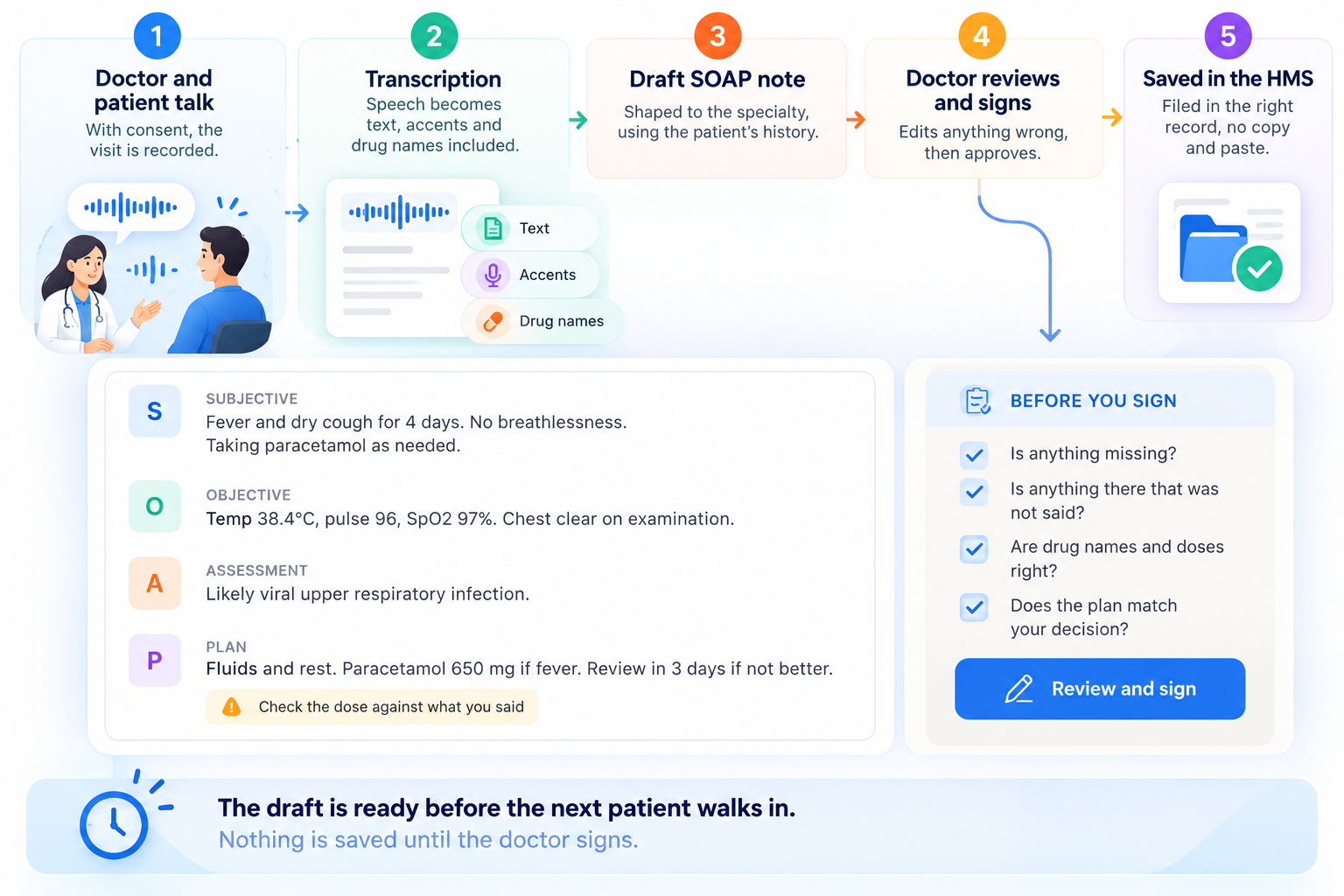
1.1 How the Doctor Talks and the Note Writes Itself
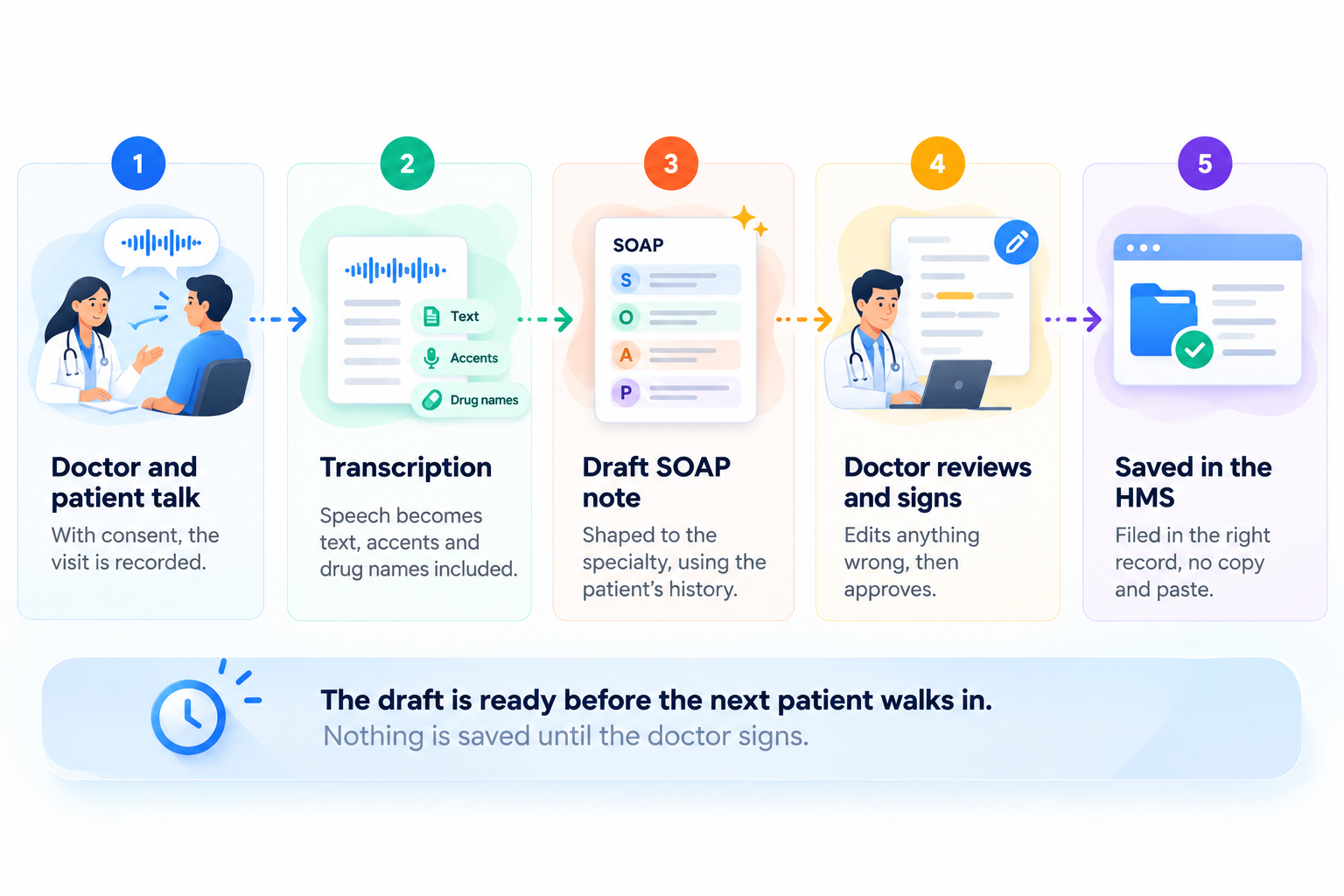
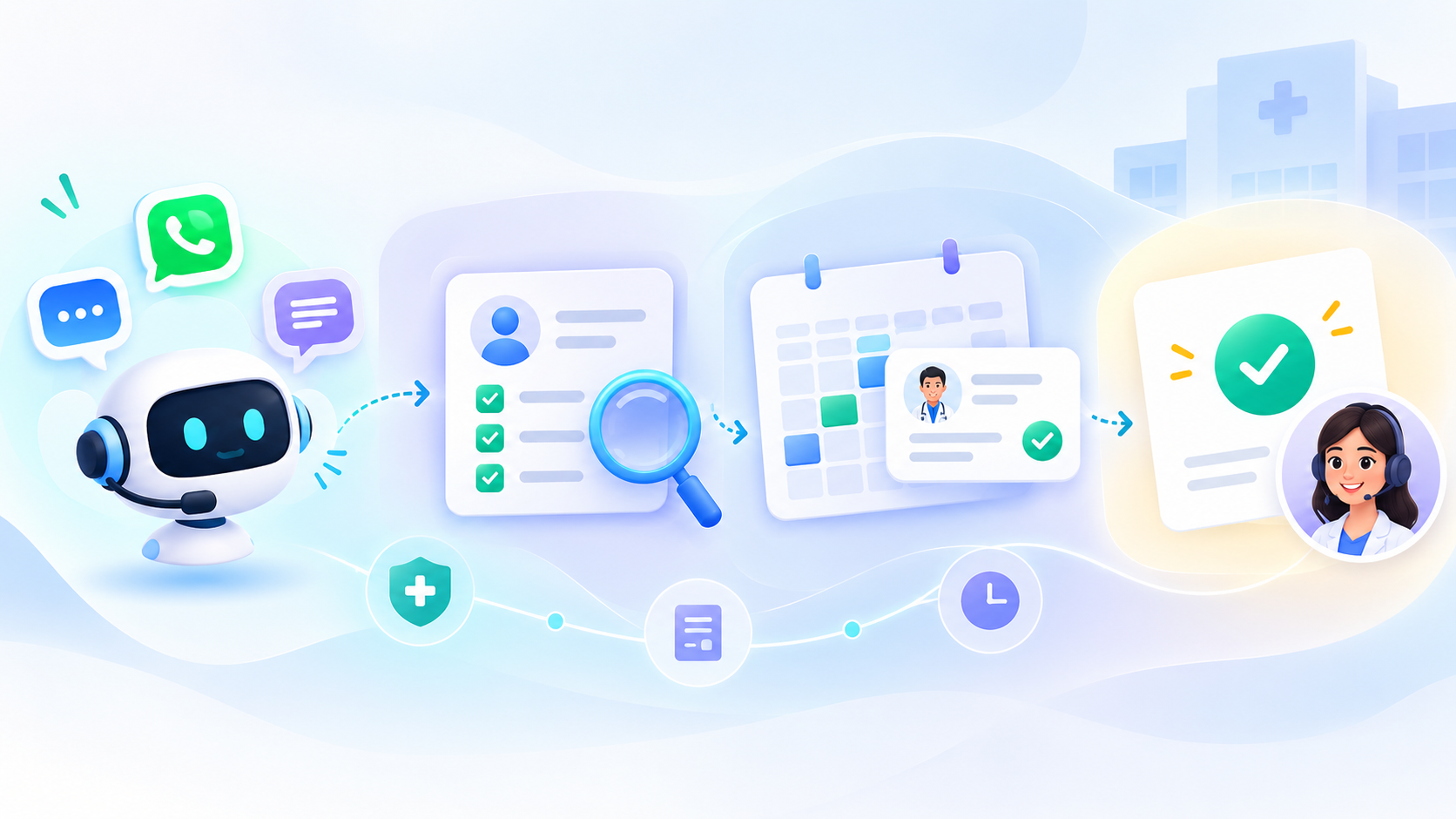
The doctor and patient talk as usual. With the patient's consent, a phone or desk microphone records the visit. Consultation transcription turns speech into text, and the AI sorts it into a SOAP (a standardised framework clinicians use to document patient encounters by organising information into Subjective, Objective, Assessment, and Plan sections).
note. When the doctor talks, the notes write themselves, ready for review before the next patient walks in.
1.2 Why Documentation Eats OPD Time
Every OPD has a fixed number of doctor hours. Typing notes during the consult takes eye contact away from the patient. Typing them after the clinic takes the doctor's evening. Either way, the cost shows up in OPD throughput or in burnout.
1.3 What the Evidence Shows So Far
The gains are real but modest, and they grow with use. A JAMA study published in April 2026 compared more than 1,800 clinicians using AI scribes with 6,770 who did not, across five US hospitals. Scribe users spent about 16 minutes less a day on documentation. Clinicians who used the scribe on more than half their visits saved three times as much.
Should You Choose a Standalone or Connected Scribe?
What each type can do, and why connection usually wins
For most hospitals, a connected scribe beats a standalone one. A standalone scribe is quick to start, but doctors must copy its notes into the HMS by hand, and it knows nothing about the patient beyond the visit. A connected scribe reads the history, files the signed note in the right record and keeps one source of truth.
2.1 What a Standalone Scribe Does Well
A standalone app needs no IT project. A doctor can download it and start the same day. That makes it a fair way to test whether doctors like dictating and reviewing. The catch comes later, when every note must be pasted into the HMS and the scribe cannot see allergies, past visits or current medicines.
2.2 What a Connected Scribe Adds
HMS integration with AI changes three things. The scribe opens the right patient automatically, so nobody has to search. It can use past visits and lab results to fill the note more completely. And the signed note lands in the patient's record without copy and paste, so billing, referrals and follow-ups all start from the same note.
The market is moving this way. In February 2026, Epic released its own built-in scribe, AI Charting, and Digital Health Insights reported that it could displace separate scribe vendors.

How Do You Roll Out a Scribe Across Your OPD?
The guardrails, the first pilot, and what it means for your team
Start with one busy speciality, connect the scribe to your HMS, and measure before and after. Set the guardrails first. Patients consent to recording, doctors sign every note, and edits between draft and signed notes are logged. Widen the rollout only when the numbers hold.
3.1 Why Every Note Still Needs a Doctor's Signature
Drafts are good, not perfect. A 2026 UC Davis Health study reviewed 356 AI-written notes. It found 94.7% free of significant errors, but 18% had something missing and 5.3% had errors that could cause serious harm. The doctor's read and signature is the safety net, so plan review time into every consult.
3.2 The Guardrails to Set First
Tell patients the visit is being recorded and ask for consent. Keep drafts out of the record until the doctor signs. Log every change between draft and signed note. Check where recordings are stored and for how long. Plan for India's DPDP Act, HIPAA in the US and any local rules on clinical software.
3.3 Where to Start and What It Means for Your Team
Pick a high-volume speciality with a standard note layout, such as general medicine. Run a four-week pilot and track patients per session, time to sign each note and how much doctors edit the drafts. Cost rises with the number of specialities and languages and with how deeply you connect to your HMS. If you are weighing an off-the-shelf AI ambient scribe against one built into your own platform, talk to a healthcare AI development company early. Our guide to real-time voice AI agent architecture explains how live transcription works.
The scribe earns its place when the doctor looks at the patient, not the keyboard.
An AI ambient scribe for hospitals gives doctors back the minutes that typing takes from patients. Connected to your HMS, it also gives you one complete record instead of two half-records.
Choose one busy OPD, connect the scribe and run it for four weeks against your current numbers. When you are ready to scope it, talk to a healthcare AI team about connecting a scribe to your HMS.
Frequently Asked Questions
What is a SOAP note?

Do patients need to agree to being recorded?
Does an AI scribe work with Indian languages and accents?
Should we start with a standalone scribe and connect it later?
How much OPD time can an AI scribe save?
Explore more blogs

Building intelligent products, modern web platforms, and custom digital experiences.