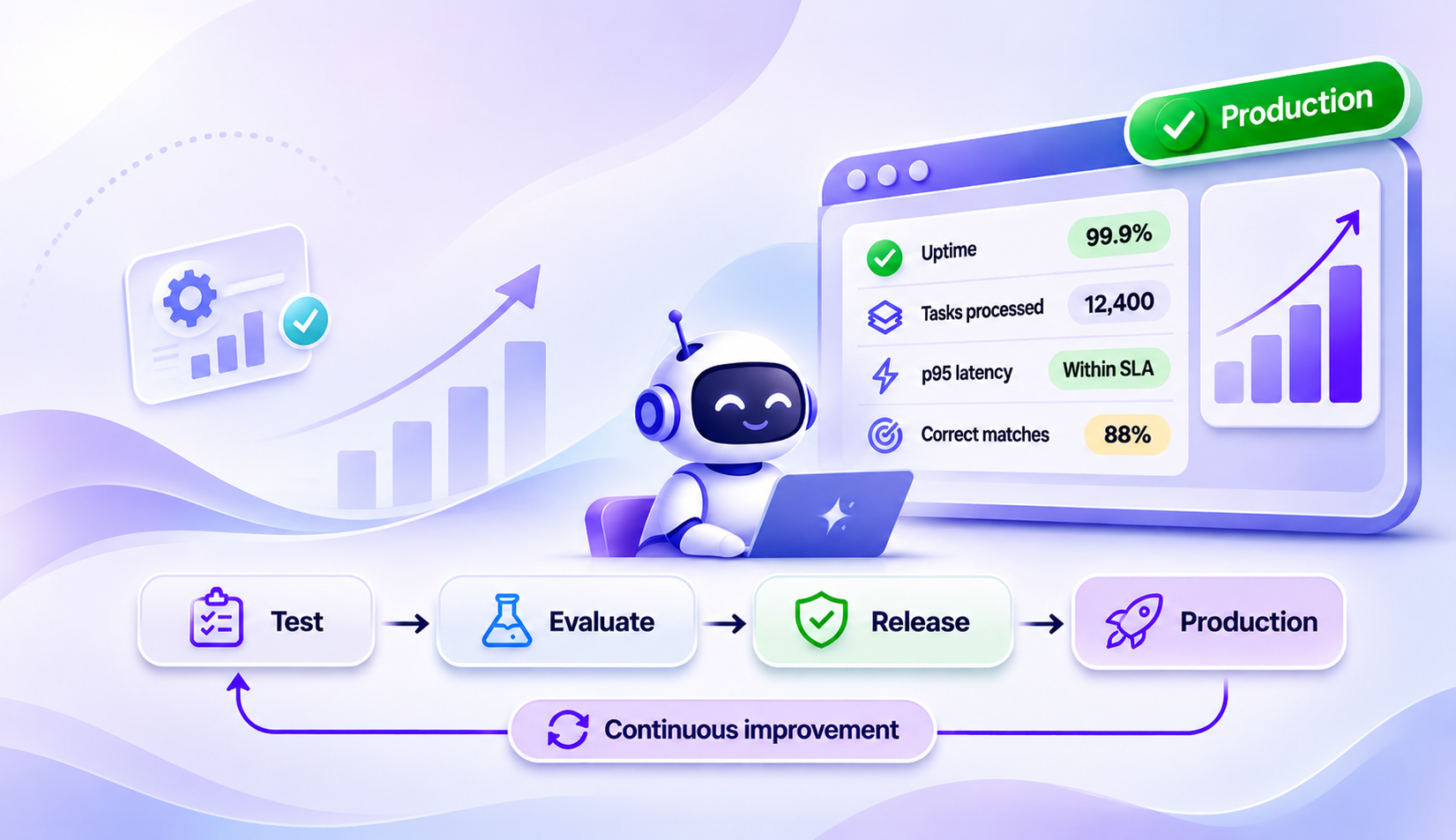
Most AI agents look brilliant in their launch week. Requests flow in, answers stream out, the error log stays clean, and someone shares a green dashboard in Slack.
Then the real-world edge cases arrive. Finance wants to know whether the invoice agent matched the right purchase order, not merely how fast it ran. Support notices that the same refund request draws two different answers on consecutive days. Nobody can explain why, because the team tracked whether the system was available, never whether the work was correct.
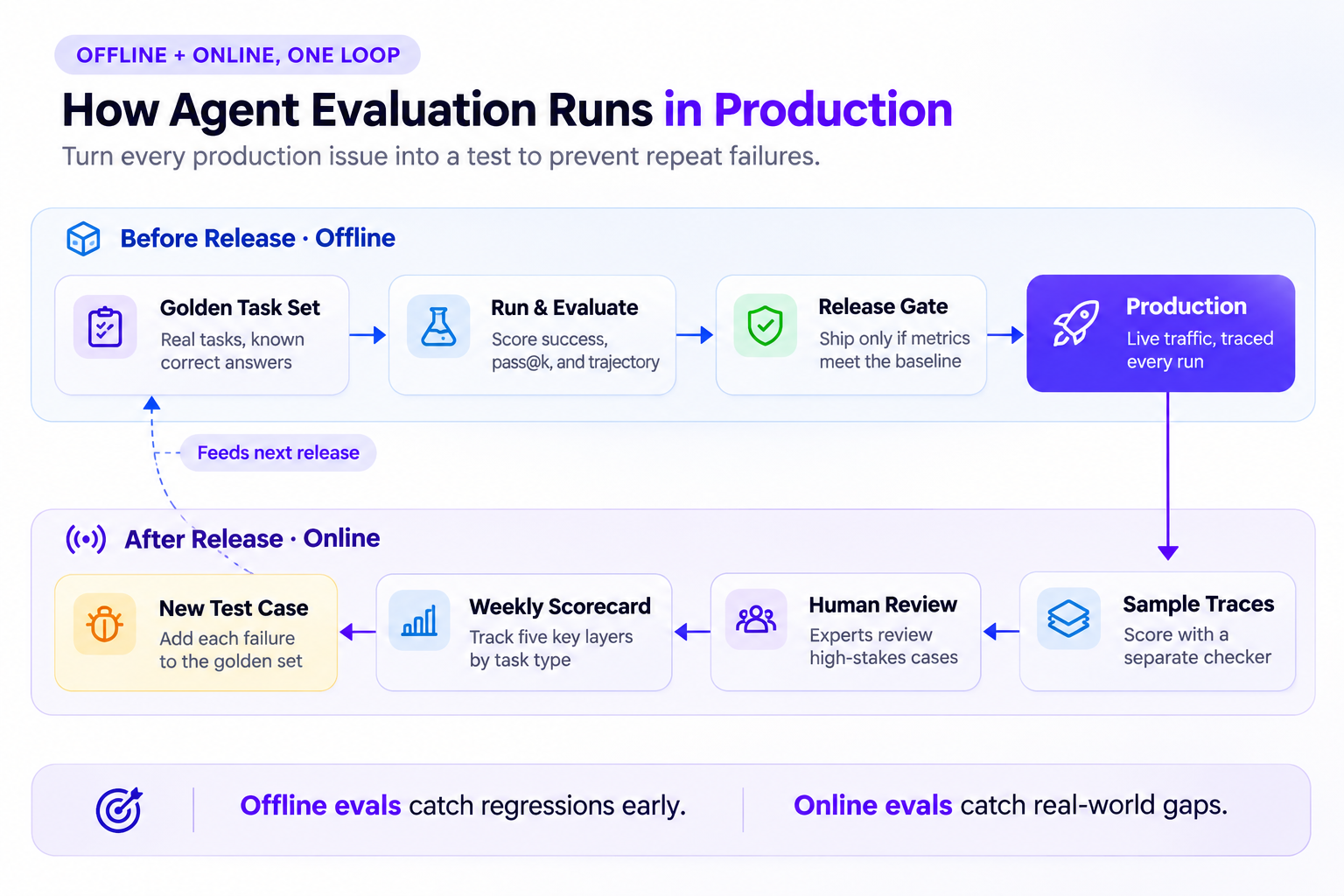
AI agent evaluation metrics close that gap. The ones worth tracking focus on concrete outcomes. Did the agent complete the task accurately? Does it deliver the same result across repeated runs? And what does each successful task truly cost?
The gap is widespread. LangChain's State of Agent Engineering survey of 1,340 practitioners found that 57% of organisations already run agents in production, and a third name output quality as their biggest bottleneck. Yet only 52% run offline evaluations, even though 89% have observability in place. Most teams can watch their agents execute. Far fewer systematically grade how well they perform.
In this guide, we cover:
- Why is it so hard to tell if an AI agent is working?
- Which AI agent evaluation metrics actually matter?
- How do you put agent evaluation into practice?