AI-assisted coding can accelerate software development, but speed alone does not determine whether a product is successful. The real comparison is how AI and engineering teams work together across the full software lifecycle.
A product team has a deadline approaching. The backlog is growing, a customer has requested a new feature, and the engineering team is already balancing bug fixes, reviews and infrastructure work. A developer opens an AI coding assistant and generates a working first draft in minutes. The same task, approached manually, might have taken much longer to get to that first version.
But when the team reviews the output, new questions appear. Does it fit the existing architecture? Are edge cases handled? Is the code secure, maintainable and tested? Will it behave correctly when real users and production data put it under pressure?
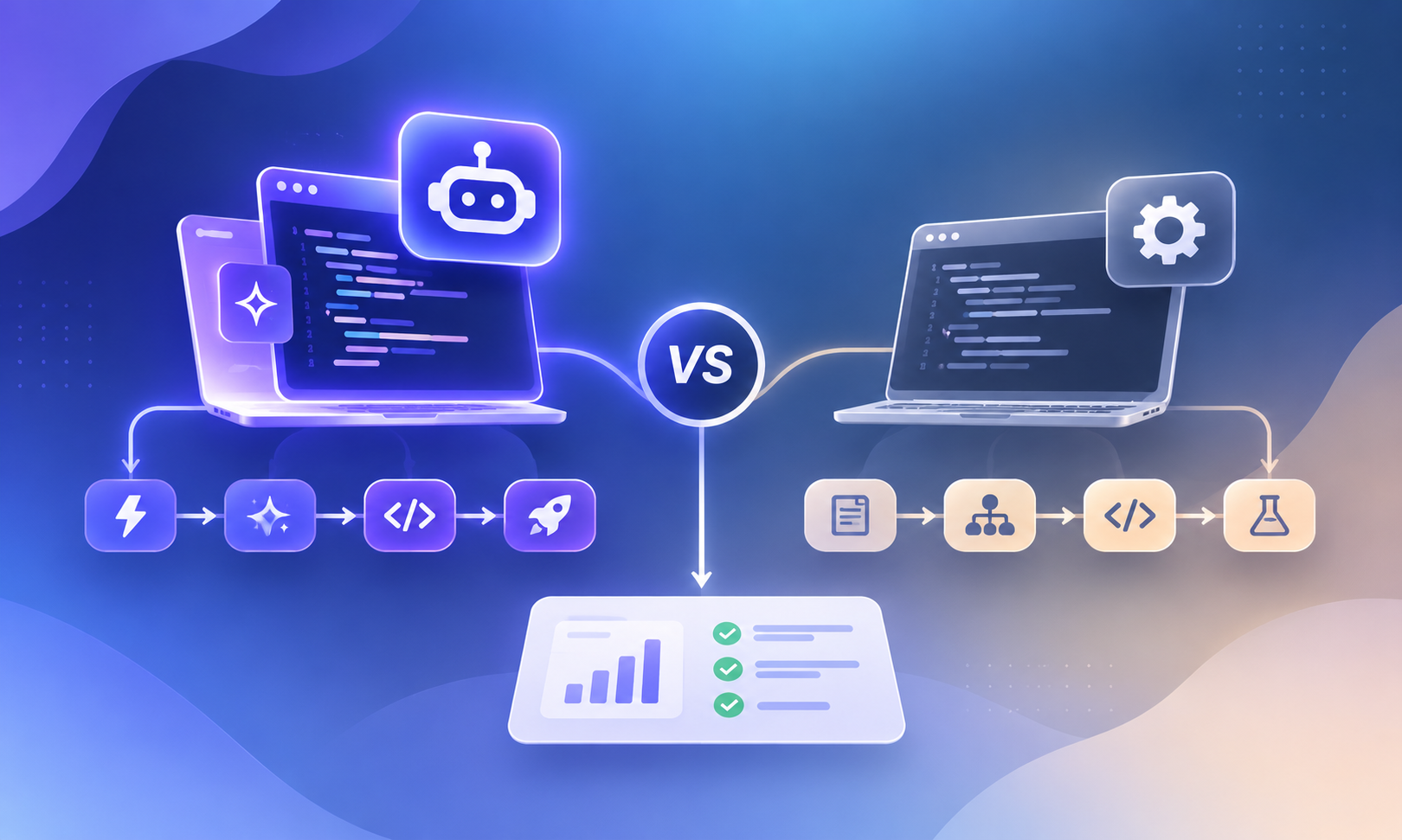
This is the real comparison between AI-assisted coding and traditional development. It is not simply machine versus human, or fast versus slow. It is a strategic choice about how work is distributed between people and AI across the software lifecycle. To make that choice well, we need to look beyond code generation and follow the work from the first idea to a reliable release.
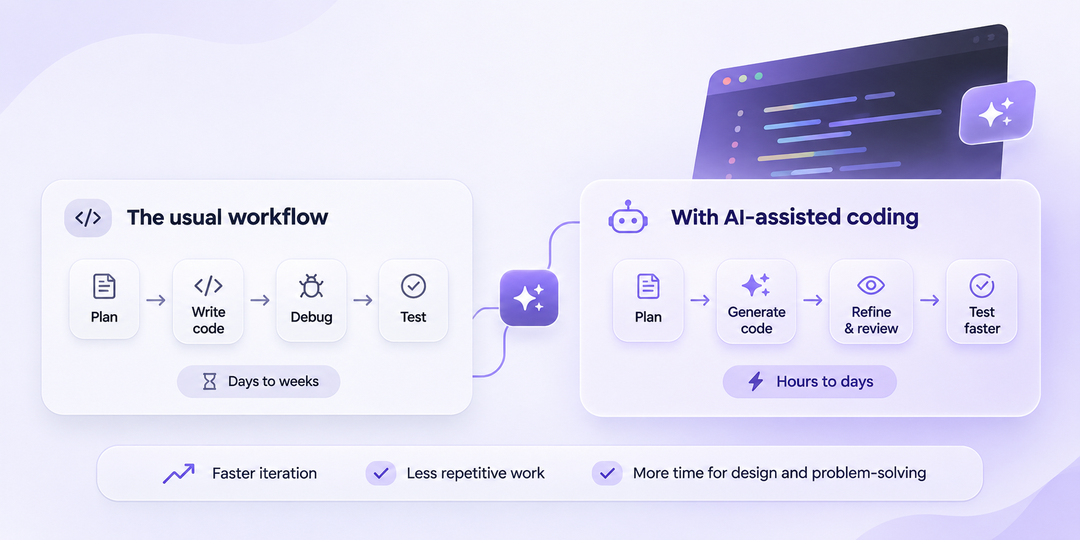
In a traditional development workflow, engineers translate requirements into technical designs, write code, run tests, review changes and prepare releases. The pace depends on the complexity of the task, the team's experience, the quality of the existing codebase and the feedback available. The process can be deliberate, but it gives engineers direct control over implementation decisions.
AI-assisted coding changes parts of that process. A developer can ask an assistant to explain an unfamiliar module, generate a component, suggest a refactor, draft tests, identify a likely bug or produce documentation. This reduces the effort required for some repetitive and exploratory tasks. It can also help a developer move from a blank file to a prototype more quickly.
The difference becomes clearer when the work is viewed across the lifecycle. AI can help scaffold a feature, but requirements still need clarification. It can suggest an implementation, but the team must validate whether the approach fits the system. It can generate tests, but those tests need to check the right behavior. It can explain a code change, but an engineer remains accountable for approving it.
Traditional development is not automatically safer or higher quality, and AI-assisted development is not automatically faster end to end. Poorly understood requirements, weak reviews and inadequate testing can undermine either approach. The strategic advantage comes from using AI where it removes friction while keeping engineering judgment at the decisions that shape the product.
As the team starts using AI more often, the question shifts from whether it can write code to whether the resulting software can be trusted in production. AI-generated code may be plausible while still containing incorrect assumptions, insecure patterns, missing error handling or dependencies that do not belong in the project. The risk grows when developers accept large changes they cannot confidently explain.