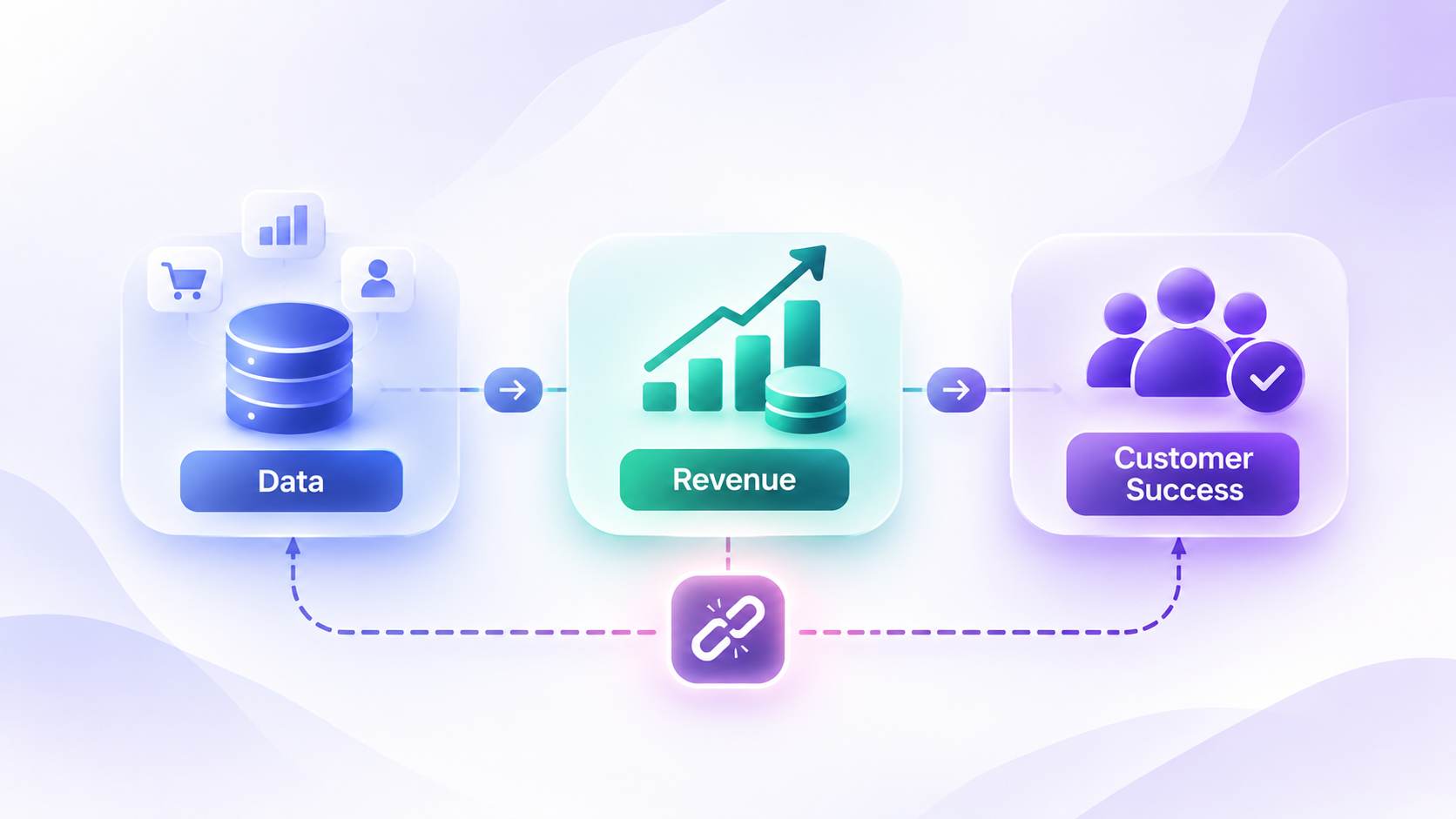
Closing the gap starts with a shared view of the customer and the business. This does not mean forcing every team to use one application. It means making important information from CRM, billing, product usage, support and customer success systems available in a consistent, governed way.
A connected data foundation can bring these signals together around common identifiers such as customer, account, subscription and product. Clear definitions matter: teams need to agree on what counts as an active customer, product adoption, renewal risk, expansion opportunity and recurring revenue. Without shared definitions, even integrated dashboards can produce conflicting interpretations.
Once the information is connected, analytics can reveal patterns that are difficult to spot in isolated reports. For example, declining usage combined with unresolved support issues and an approaching renewal may indicate an account that needs attention. Increased usage, successful onboarding and new team invitations may point to expansion potential. These are signals for teams to investigate—not automatic conclusions about a customer.
The next step is to connect insight to ownership and action. A risk signal should reach the right customer success owner with enough context to understand it. A potential expansion signal should be visible to the account team. Revenue and operations leaders should be able to trace key metrics back to their underlying sources and understand when the data was last refreshed.
Start with a focused use case rather than trying to connect everything at once. Choose a high-value question, map the systems and data needed to answer it, establish data quality checks, and agree on the action that should follow. Then measure whether the new view improves response time, forecast accuracy, retention visibility or another meaningful business outcome. Expand only after the workflow proves useful.