.png)
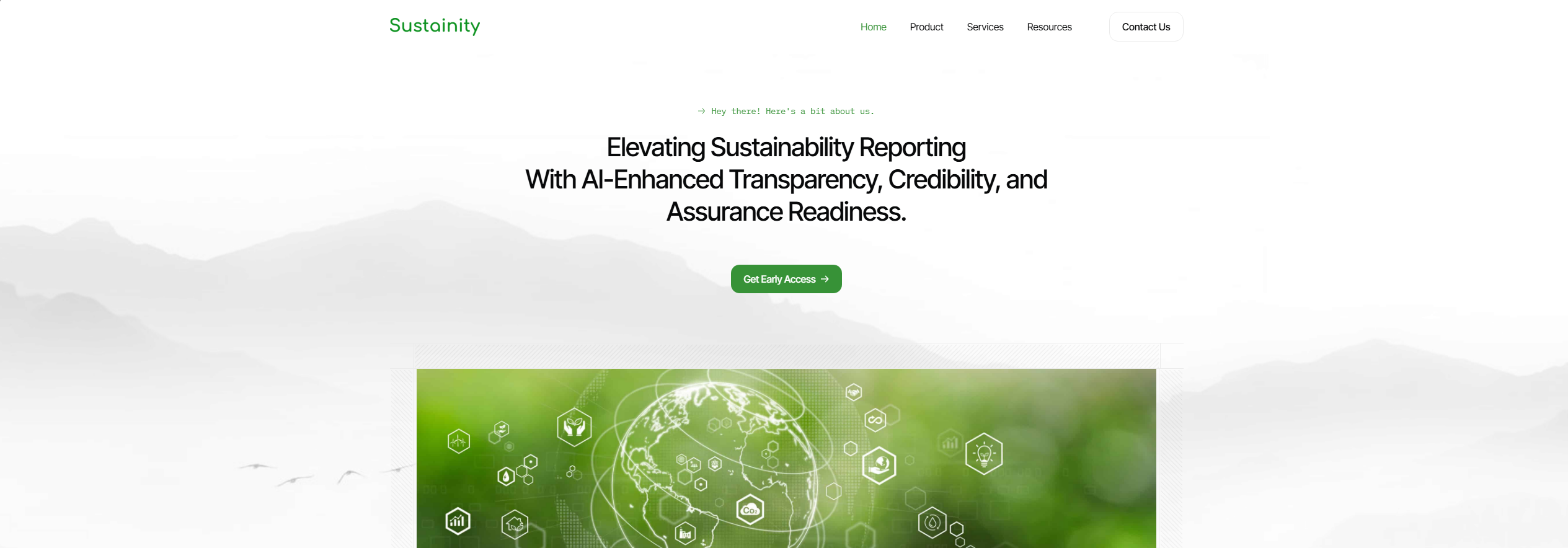
Navigating the labyrinth of global climate frameworks—from GRI and ISSB to BRSR—presents a formidable barrier for corporate teams trying to transition toward sustainable operations. The primary mandate was to build a digital presence that immediately establishes deep technical authority while making dense, highly technical reporting structures feel accessible and actionable.
To bridge this gap, the product architecture was engineered around a "Complete Workspace" design aesthetic. Rather than treating environmental data as abstract metrics, the interface utilizes modular blocks and clean structural layouts to explicitly illustrate how data collection, gap analysis, and report generation fit into an end-to-end workflow. By translating multi-layered compliance frameworks into an intuitive, seamless user journey, the platform lowers the friction of entry, reassuring corporate compliance teams and ESG consultants that sophisticated regulatory tracking can be managed with absolute precision.
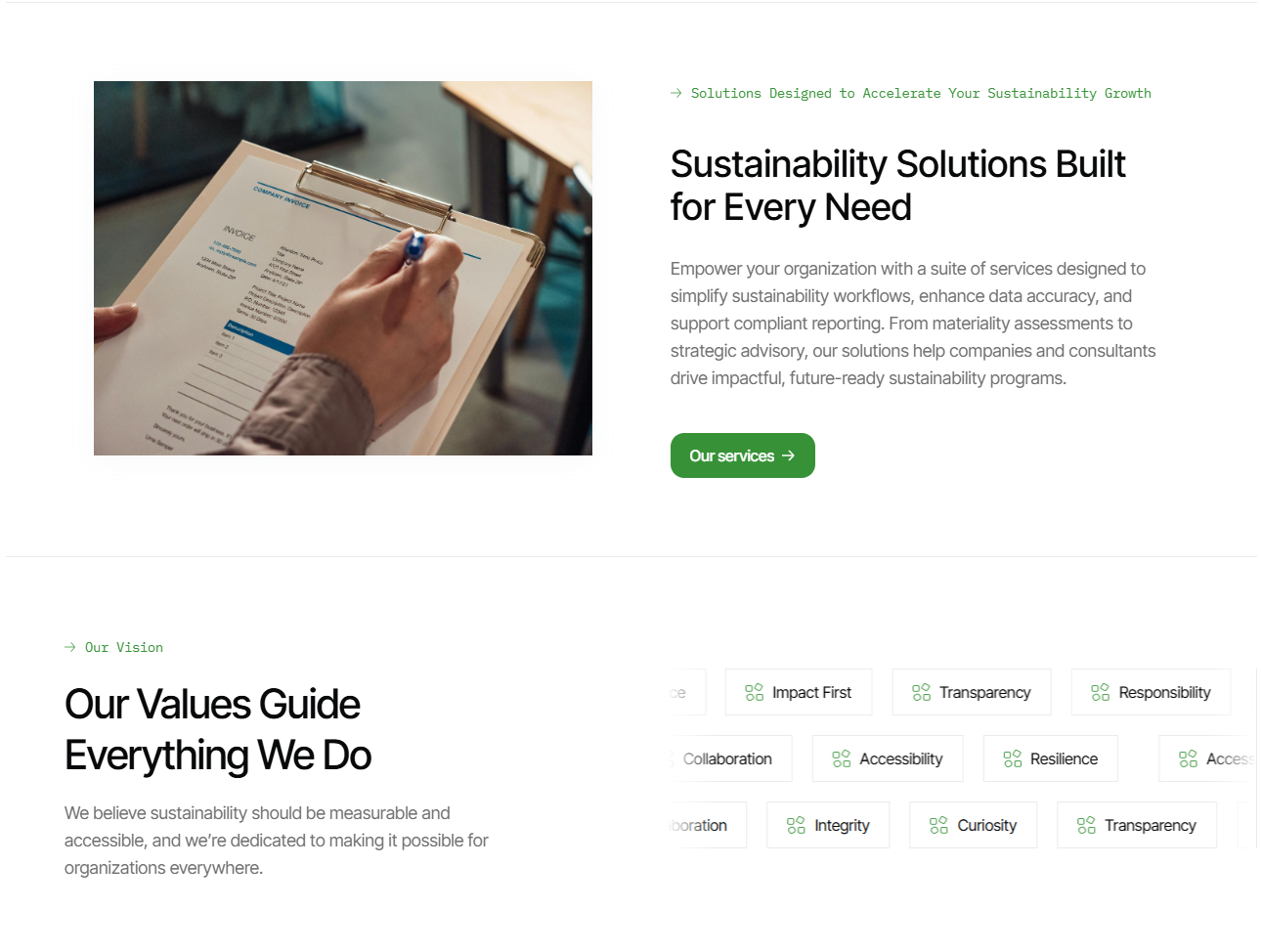
In a category defined by rapid change, maintaining absolute transparency is vital. A key challenge during development was balancing modern automation capabilities with the trust required for high-stakes corporate reporting. This was solved by purposefully weaving a core "Mission & Values" narrative—anchored on impact first, transparency, and responsibility—directly into the UI flow, reinforcing the rigorous human stewardship behind the system.
Simultaneously, the platform had to remain adaptable to a shifting regulatory landscape. Climate policies and global guidance documents evolve continuously, risking out-of-date information. To combat this, a flexible inner-pages architecture was engineered alongside a dynamic Webflow CMS. This setup empowers the team to manage a comprehensive library of standards, frameworks, and regulations in real time, ensuring the digital platform consistently acts as an authoritative source of truth.
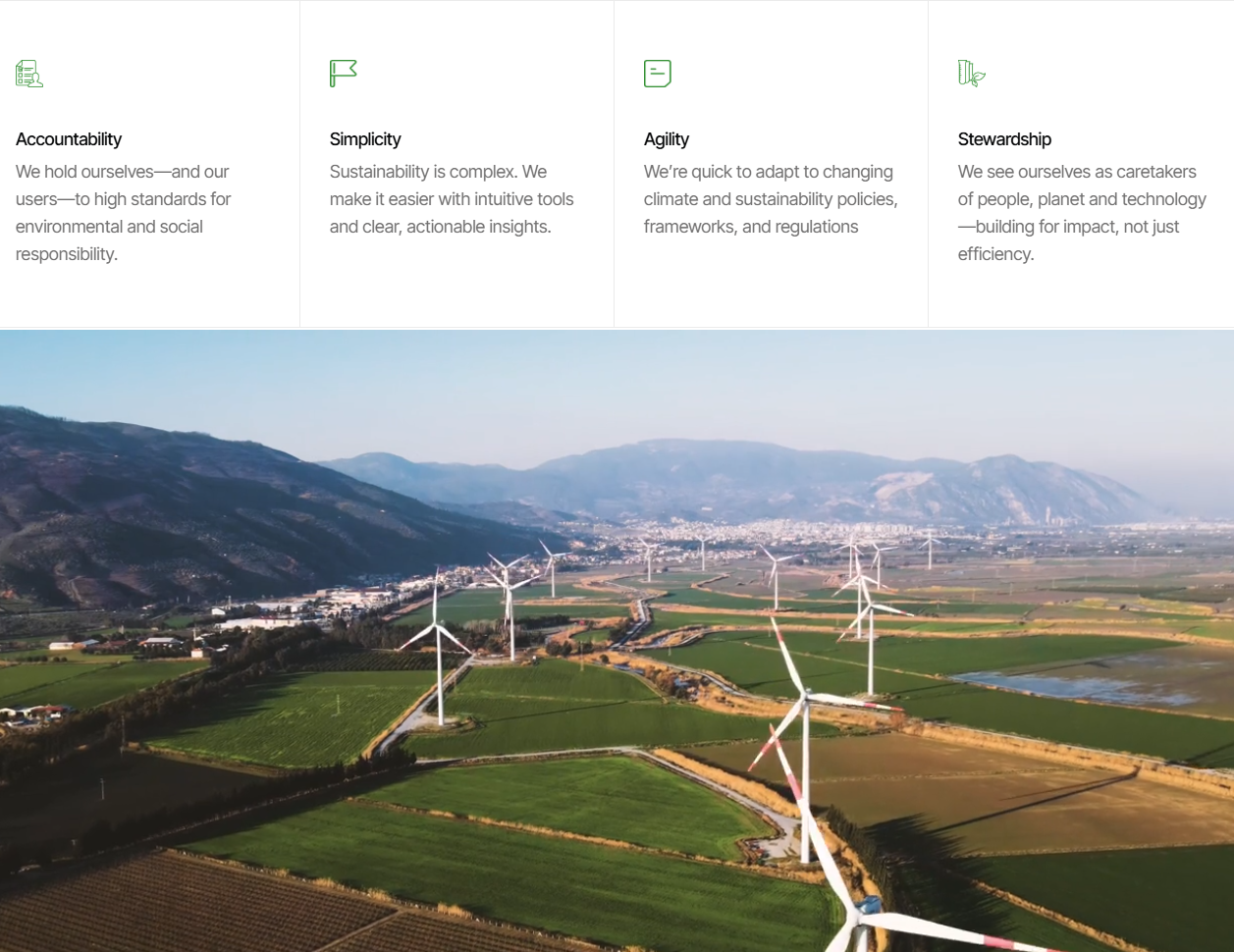
Moving from high-level strategy to production required a robust frontend architecture capable of delivering high-performance interactions without sacrificing security or scalability. Built entirely on Webflow, the technical implementation leverages fluid responsiveness, clean DOM structures, and smooth, refined animations that reflect a modern, forward-thinking SaaS standard.
Beneath the polished visual surface lies a conversion-optimized funnel designed for high-intent actions. Strategic touchpoints for early access, demo bookings, and trial initiations are seamlessly embedded throughout the user journey. Combined with configured checkout workflows to handle direct product and service subscriptions, the digital ecosystem successfully bridges the gap between educational authority and commercial execution, providing a scalable foundation for businesses managing energy, water, and waste tracking at any scale.

The Sustainity web platform extends far beyond a traditional digital brochure; it functions as an essential, high-performance workspace designed to guide organizations into a climate-resilient future. By seamlessly integrating structured regulatory frameworks, transparent product narratives, and a robust production architecture, the platform successfully positions its brand as a category leader—empowering businesses to automate their sustainability workflows and lead with absolute confidence.

Building intelligent products, modern web platforms, and custom digital experiences.



.png)